Okay, so check this out—I’ve been messing with browser extension wallets for years, and rabid skepticism is part of the job. My instinct said most extensions felt like rushed products stitched together, and at first that seemed true here too. Whoa, that surprised me. Over a few weeks though I watched patterns emerge, small design choices that mattered, and those tiny things changed my whole mental model about usability and safety in DeFi wallets.
I’ll be honest, I’m biased toward tools that respect the UX of real humans, not just devs. Something felt off about the early-generation wallets where every action screamed “developer first.” Hmm… but Rabby nudged me the other way. The interface choices are quiet but effective, and they reduce costly mistakes in ways that you only appreciate after several face-palming moments saved.
At first I thought compatibility would be the main draw, but then realized security ergonomics was the real win—particularly for frequent chain-hoppers. Whoa, this actually helps. My point is simple: switching networks without friction matters because human error compounds across chains, and Rabby reduces that friction noticeably.
Story time—last month I was bridging funds from an L2 to a lesser-known sidechain, and the wallet warned me about a suspicious RPC that didn’t match the expected chain metadata; that little nudge prevented me from doing something dumb on autopilot. Wow, small wins add up. On one hand it felt like basic hygiene, though actually I know many users ignore those prompts until an expensive mistake happens.
Here’s what bugs me about many wallets: they show you confirmation modals that are cryptic and overloaded with gas jargon. That part bugs me. Rabby strips down confirmations into digestible chunks while keeping advanced details accessible, which is a trade-off I appreciate. Initially I thought simplifying confirmations meant hiding info, but then I noticed the advanced toggle—so they get both camps covered.
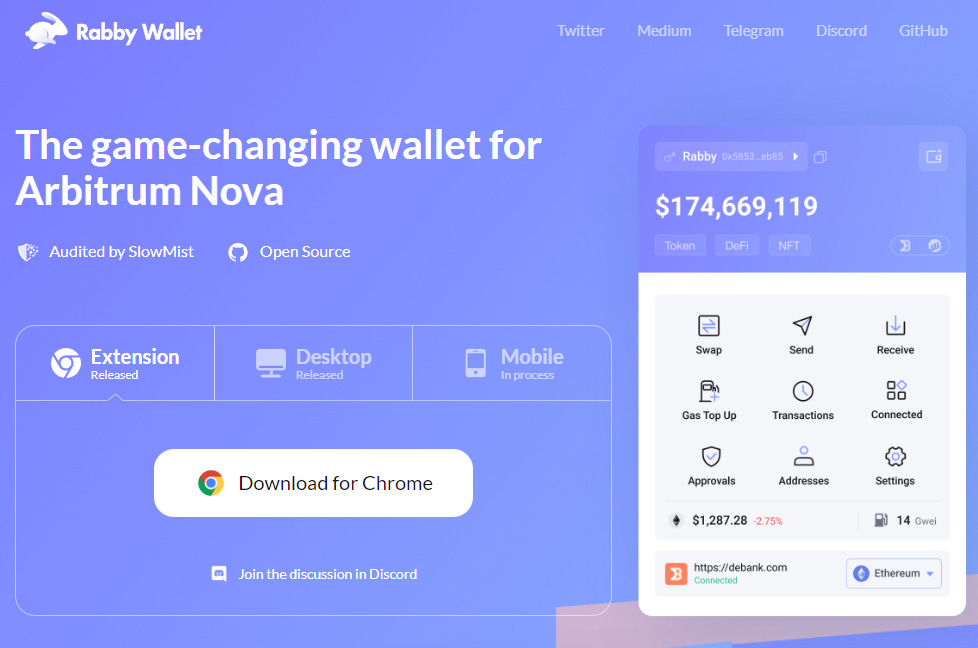
There are three practical ways Rabby stands out for me. First, true multi-chain handling that doesn’t require manual network fiddling every time. Second, built-in heuristics for token approvals that surface risky allowances before they become a liability. Third, UX cues that guide you through contract interactions without sounding like a legal doc. Seriously, the approvals interface is a game-changer.
Whoa, that felt reassuring. The approvals module prompted me to use “revoke” after a DeFi DApp left an unlimited allowance, and doing that took less than a minute. My gut told me earlier wallets would make revokes fiddly or buried, and Rabby didn’t. On a longer view, those small frictions are where money gets lost, whether via phishing or careless approvals.
Okay, some nuance—Rabby is not a silver bullet. It won’t protect against every sophisticated social-engineering attack, and no extension wallet can be a full substitute for hardware wallets in high-value custody scenarios. I’m not 100% sure about its edge cases with brand-new testnets, though in practice it supported the ones I needed. Initially I thought I’d keep it as a secondary tool, but it migrated into heavier daily use.
Design choices that feel human
Rabby’s team seems to be listening to real user workflows rather than abstract power-user fantasies. That design philosophy is a breath of fresh air in crypto UI land. Hmm… I like that balance; it’s rare. The mnemonic and account import flows are straightforward, with sane defaults and clear warnings, and that reduces the cognitive load on late-night trades.
Try it and you’ll see how quick toggles for chain switching reduce errors. Wow, I mean really reduce them. The wallet groups tokens by chain and flags mismatched chains so signatures are less likely to happen on the wrong network. My instinct said I’d still make slip-ups, but the UI almost catches you like a safety rail.
One underappreciated capability is its built-in contract interaction history, which helps debug weird transactions. Initially I thought transaction explorers were enough, but then I wanted one-click context from within my wallet. Rabby gives that context without dragging me to a new tab, which is a subtle but meaningful quality-of-life improvement.
Okay, so check this out—if you’re someone who uses DeFi daily, you’ll appreciate the speed optimizations. Rabby caches chain metadata efficiently and avoids repeated RPC lookups. That matters when your workflow is a chain of five confirmations across multiple networks; latency compounds otherwise and irritates you into mistakes.
Also, I have to call out the dev tools friendliness. For folks building DApps or scripts, Rabby exposes useful logs and interpretable errors that help trace failed calls. It’s not for everyone, but if you tinker under the hood it’s a proper helper. I’m biased toward tools that help developers and end-users in the same package; this one does both decently well.
Now a brief warning—extensions are inherently a middle ground between convenience and security. You can reduce risk, not eliminate it. If you’re custodying large sums, combine Rabby with a hardware wallet and strict operational practices. I’m not saying Rabby replaces a Ledger or Trezor for vault-level security. Somethin’ has to live on hardware when stakes are high.
On the topic of approvals, Rabby’s prompts include readable metadata plus a clear revoke button. Seriously? Yes. That reduces the common problem where people accept “infinite” allowances and forget about them. The wallet nudges you back toward safer defaults, and over time that saves money and stress.
There’s also a thoughtful approach to permission scopes; they don’t hide the contract addresses behind opaque names. Instead, the interface gives both the contract and the DApp name, plus an easy link to investigate it further. Initially I thought that level of detail might overwhelm newbies, but in practice it educates them without being preachy.
How I use Rabby day-to-day (and why it stuck)
My daily routine includes swapping, bridging, and occasional NFT interactions; Rabby fits into that flow. I set up accounts per activity type—trading, lending, and experimentation—and the wallet’s quick-account-switch reduces mental load. Whoa, such a small thing but it matters when juggling multiple positions across chains.
I’ll be honest: the onboarding had a few rough edges in my first week. There were small UI copy issues and one modal that repeated text. Minor typos, nothing fatal. But the team iterated and fixed things fast, which I appreciated. On one hand that inconsistency annoyed me, though actually it signaled an active dev cadence which I like.
For people migrating from other extensions, Rabby offers an import path that preserves account labels and metadata in a useful way. That eases the transfer pain. I’m not saying it’s painless every time—far from it—but it’s better than re-creating accounts and losing context.
Check this out—if you’re privacy-minded, Rabby includes simple privacy hygiene features that limit cross-site token leakage. I’m not going to claim it solves global surveillance, but it reduces the attack surface for common scripting attacks. That privacy nudging sits comfortably with the UX rather than making things obscure.
And yes, transaction batching and gas control are present. The gas UI gives a sane recommended range and explains trade-offs without being patronizing. My experience is that this kelps reduce frantic mistakes during network congestion when you really need clear information. Something about having that clarity in the moment prevents dumb rash choices.
On the developer front, Rabby supports custom RPCs comfortably, which is crucial for testing new L2s. Initially I worried adding custom RPCs would be clunky, but in use it turned out clean and predictable. That reduces the time you spend troubleshooting “why is this failing locally” scenarios.
Quick FAQ
Is Rabby safe enough for everyday DeFi?
Rabby is designed for daily DeFi interactions and includes safety heuristics for approvals, chain mismatches, and phishing risks. However, for large long-term holdings you should pair it with a hardware wallet. I’m not claiming perfection—it’s an improvement in the extension category, not a hardware replacement.
Does it handle many chains well?
Yes. Rabby handles multiple chains and switches smoothly while keeping contextual warnings. The multi-chain UX reduces accidental transactions on the wrong network, which is a real practical benefit when you manage assets across L1s and L2s.
How do I get started?
If you want to try it, download and install it from the official source and import or create an account. Make sure you verify the URL and store your seed phrase securely. For convenience, you can find the download page here: rabby wallet.
So where does that leave us? I’m more optimistic about extension wallets than I was six months ago. Initially I thought they’d remain second-class citizens to hardware wallets, but in reality they can be excellent daily tools when designed thoughtfully. There’s still risk, sure—phishing hits, malicious sites, and human error—but the right UX reduces those vectors dramatically.
One last note: Rabby isn’t flashy marketing. It quietly focuses on decreases in user error, and for many of us that’s the kind of progress that pays. I’m still cautious, and I still pair it with stronger custody for big sums, but for everyday DeFi activity it has earned a spot in my routine. Somethin’ about that practical reliability makes me keep going back.